


Mediterranean Diet Fiber-Rich Side Dishes

Effortless Options for Everyday Energy & Wellness
Fiber is a type of carbohydrate found in plant foods that supports digestion, gut health, blood sugar balance, and fullness.
The Mediterranean diet naturally emphasizes fiber by prioritizing vegetables, legumes, whole grains, nuts, seeds, and fruit daily.
Why fiber matters:
✔️Supports healthy digestion & gut microbiome
✔️Helps regulate blood sugar levels
✔️Improves satiety and appetite control
✔️Supports heart and metabolic health
Daily fiber recommendations:
Women: ~25+ g per day
Men: ~38+ g per day

Combining fiber-rich sides with a lean protein follows the Mediterranean diet framework, helping build meals that are balanced, satisfying, and sustainable.
Protein pairings (mix & match)
- Baked or pan-seared salmon fillet
- Sautéed shrimp
- Grilled or roasted chicken thighs
- Cubed grilled or roasted chicken breast
- Lean beef sirloin steak
- Turkey meatballs
- Pan-seared tuna steak
- Baked or pan-seared cod fillet
- Grilled lean ground beef kebabs
Dietitian tip
Prepare 2–3 fiber-rich sides at the start of the week and mix and match them with proteins for effortless, balanced meals.
How to look for fiber on a Nutrition Facts label:
Go to “Total Carbohydrate.”Fiber is listed under total carbs (it’s part of the carb total).
Find the “Dietary Fiber” (grams per serving). This indicates the amount of fiber in one serving of that food.
Use this quick rule of thumb:
1–2g fiber = low
3–4g fiber = good source
5g+ fiber = high fiber ✅
Double-check the serving size
A food might look “high fiber,” but if the serving is tiny, you may not be getting much in a real portion.
Mediterranean Diet Fiber-Rich Side Dishes
1. Legume-Based Sides

2. Whole-Grain Sides

3. Vegetable-Forward Sides ( double the serving for options below 5g of fiber)

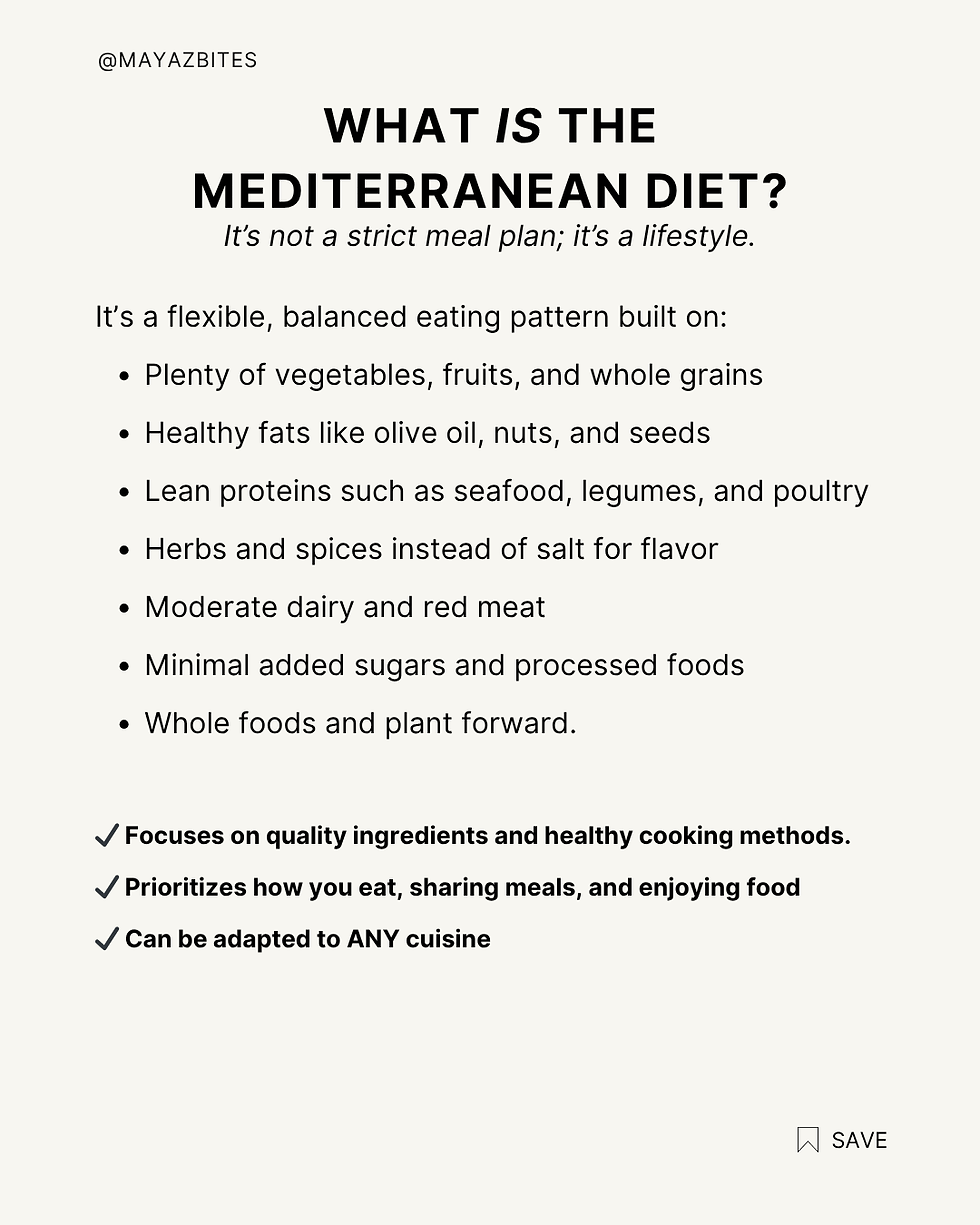
What Is the Mediterranean Diet?
How to Build a Balanced Mediterranean Diet Plate

Dietitian-approved ways to support Energy :
1. Prioritize Hydration
Even mild dehydration can affect how you feel throughout the day.
Drink fluids consistently throughout the day
Water, herbal teas, and lightly flavored waters all count
Adjust intake based on activity level and environment
Dietitian note: Thirst is not always an early indicator of dehydration.
2. Eat Balanced Meals
Meal structure plays a key role in daily energy.
Include a source of protein at meals
Pair carbohydrates with fiber and healthy fats
Avoid skipping meals when possible
Dietitian note: Balanced meals support steadier energy throughout the day.
3. Use Caffeine Intentionally
Caffeine can support alertness, but timing and quantity matter.
Choose natural sources such as tea or coffee
Avoid using caffeine in place of meals
Be mindful of intake later in the day
Dietitian note: More caffeine does not equal more energy.
4. Support Sleep Quality
Nutrition and sleep are closely connected.
Eat regularly throughout the day
Avoid large meals close to bedtime
Limit caffeine in the afternoon and evening
Dietitian note: Inconsistent sleep can affect energy regardless of diet quality.
5. Include Regular Movement
Movement supports circulation and energy regulation.
Short walks count
Consistency matters more than intensity
Choose activities you can maintain long-term
Dietitian note: Movement does not need to be intense to be effective.
6. Manage Blood Sugar Swings
Large fluctuations can contribute to energy dips.
Pair carbohydrates with protein or fat
Avoid long gaps between meals
Focus on minimally processed foods most of the time
Dietitian note: Steady intake supports steady energy.
Dietitian Takeaway
There is no single food or drink that creates energy on its own.
Energy is supported through consistent habits:
Hydration
Balanced meals
Intentional caffeine use
Sleep consistency
Regular movement
Simple, repeatable choices are more effective than extremes.
Mediterranean Diet Pantry Essentials
I know starting a Mediterranean-inspired kitchen can feel overwhelming, so I’ve put together my Amazon Essentials List to make it simple. These are the tools, pantry staples, and kitchen must-haves I personally use.
This is an affiliate link: https://amzn.to/4fParlr

Start Simple, Stay Consistent
With flexible, balanced meals built around whole ingredients, you’ll be able to stay full, feel energized, and take care of your health without giving up flavor or variety.
Bookmark this page and use this as a rotating framework to build consistency and momentum. Healthy eating doesn’t have to be perfect, just intentional.
Mediterranean Diet Amazon Fresh Shoppable Recipes:


Mediterranean Diet Meal Plans:


Mediterranean Diet Shopping List:

Explore More: Mediterranean Diet Food Lists (Volumes 1–5)
Looking to build your Mediterranean pantry or refresh your grocery list? Browse these dietitian-approved food lists to discover what to stock up on.
Each list contains a selection of 10 items, including nutrition benefits highlights and simple ways to use.


Want More Mediterranean Diet Resources and Recipes?
Looking for more support on your healthy eating journey? Bookmark this post and explore others for comprehensive Mediterranean Diet resources and expert advice. Don't forget to check my social media and follow @Mayazbites


Comments